





Trinity Chapel
Location: Frederick, Maryland
Industry: Historic Rehabilitation
Project Overview
The Trinity Chapel steeple is one of Frederick, Maryland’s most recognizable architectural landmarks. Originally constructed in 1763 and expanded throughout the nineteenth century, the structure includes a historic stone tower, timber spire, and the ten-bell Trinity Chimes that remain a defining feature of the city’s skyline. The steeple is considered one of the oldest surviving religious towers in downtown Frederick and contributes significantly to the city’s historic character.
In 2025, a major preservation effort began to restore the steeple, lantern, clock faces, belfry components, and surrounding slate roof and dormers. ECRS was selected to design and install a complete access solution capable of supporting all restoration trades from ground level to the weather vane more than 120 feet above the street.
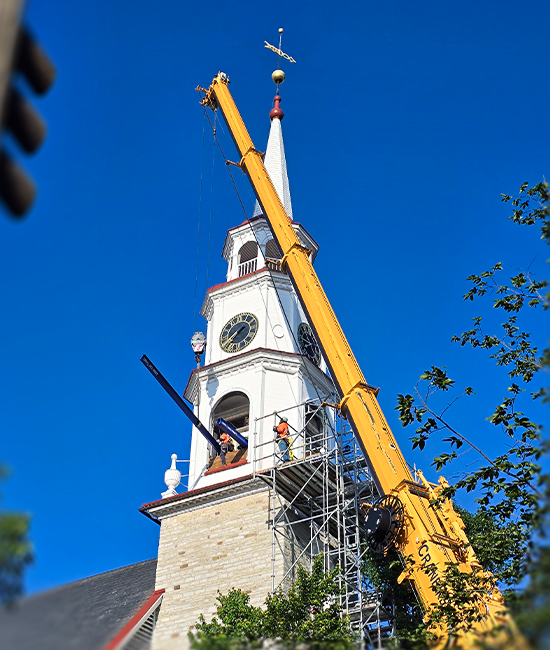
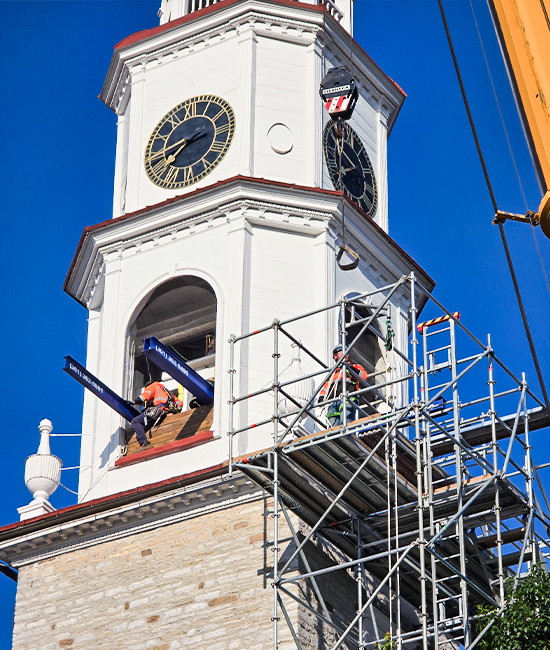
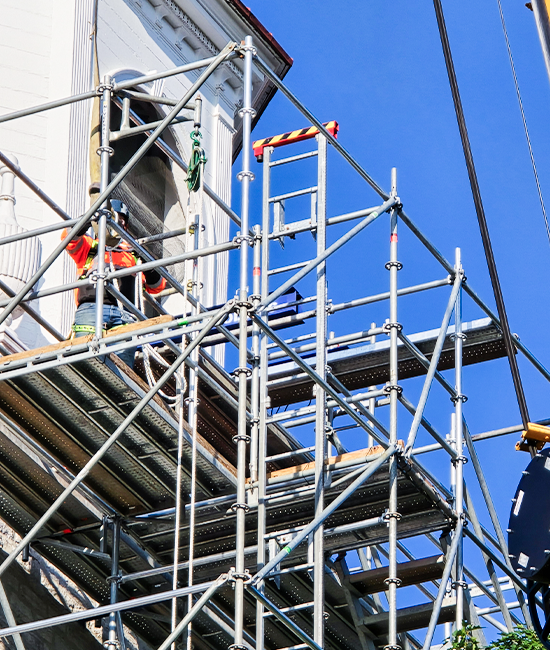
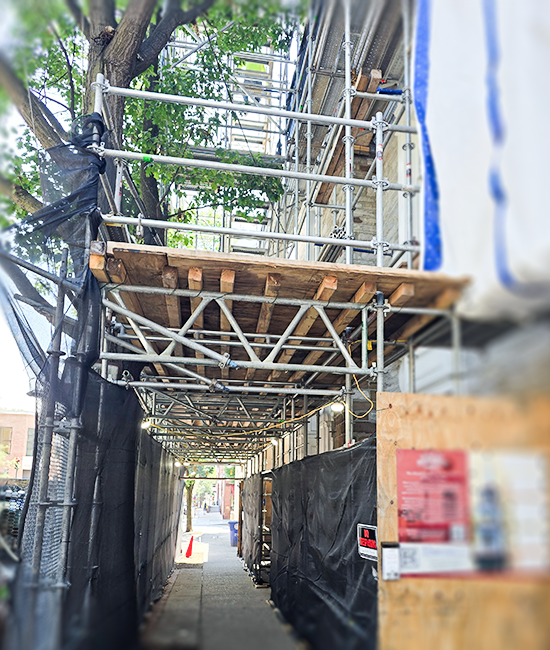
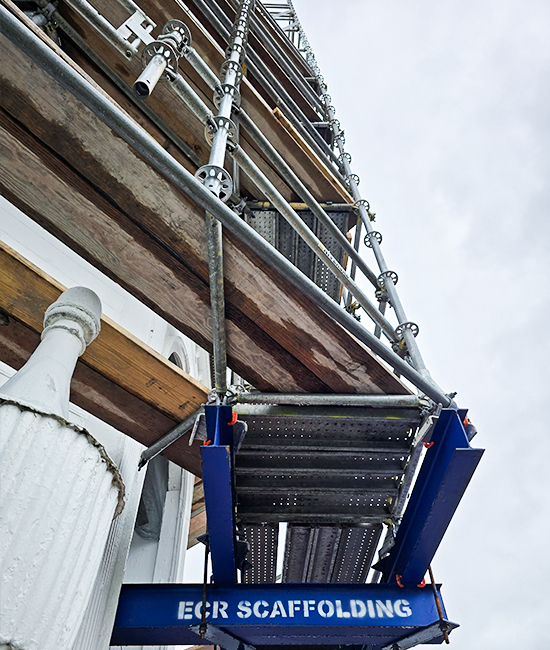
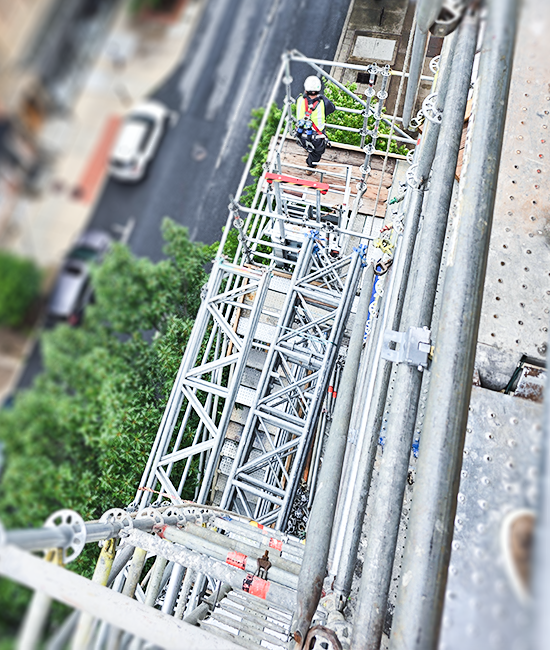
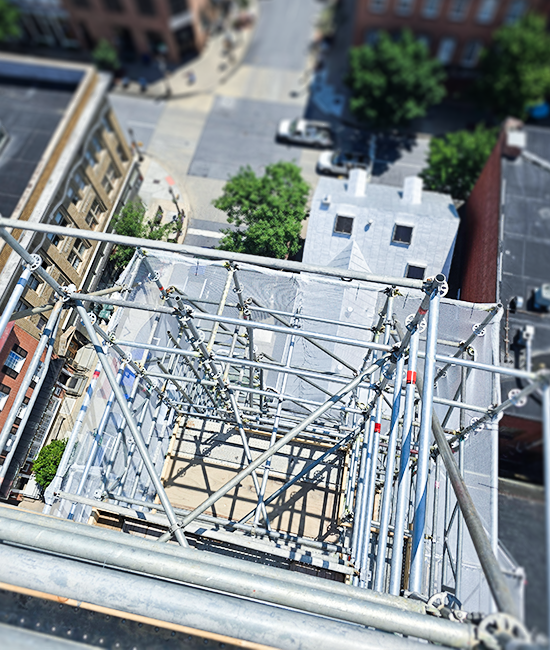
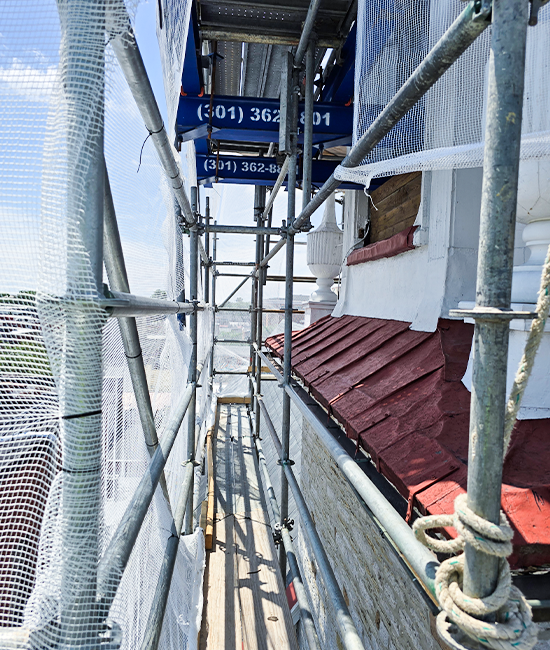
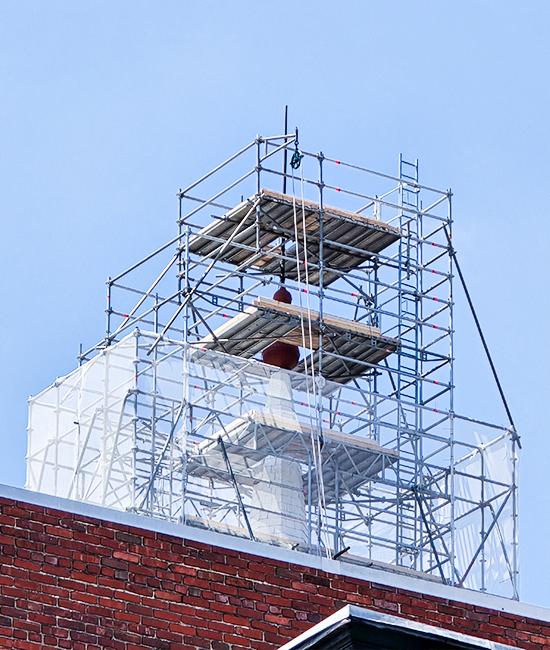
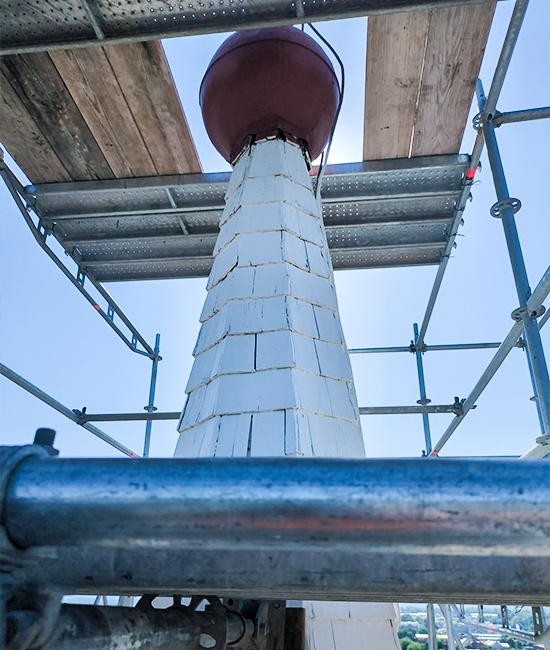
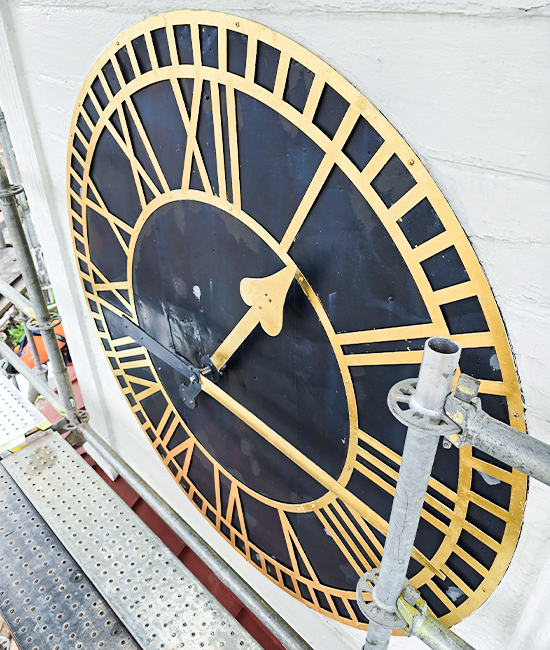
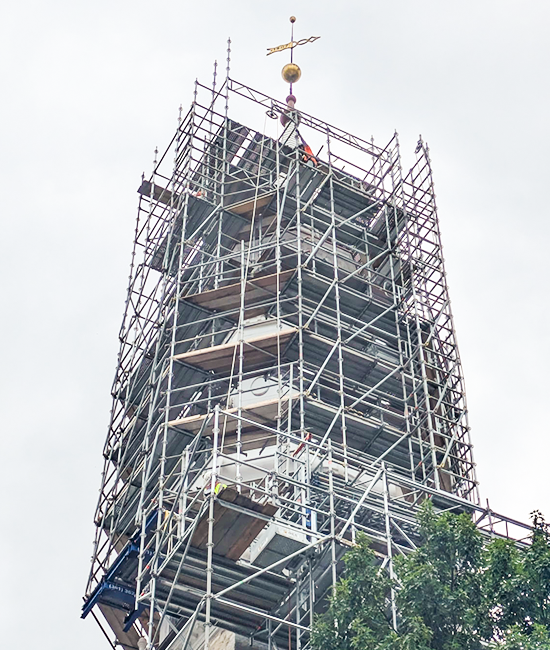
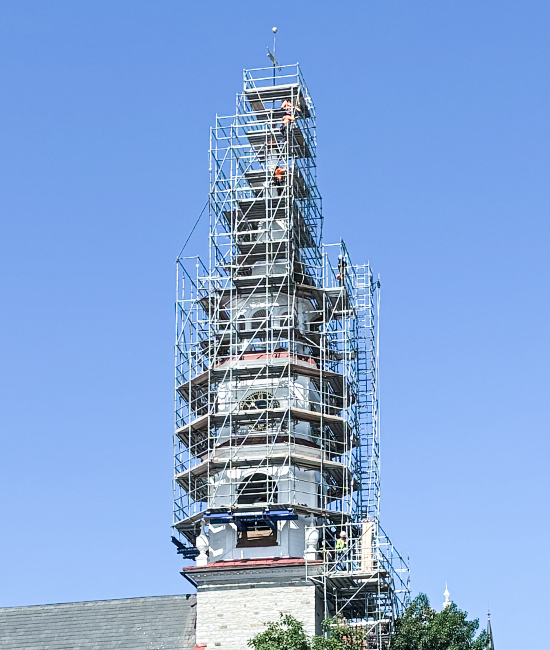
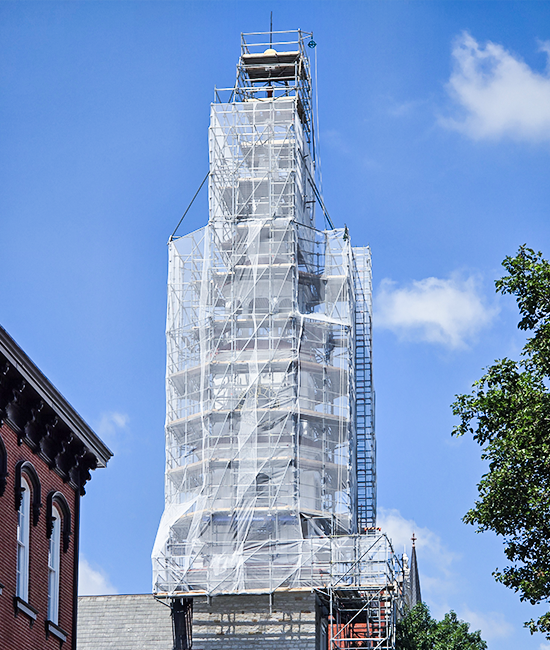
The access system had to maintain strict preservation standards while enabling efficient work across multiple elevations.
Because the steeple’s timber framing and slate roofing could not accept scaffold loads, the project required a fully non-penetrating access approach engineered for the structural limitations of an eighteenth and nineteenth century tower. Historic slate roofing of this age typically cannot support concentrated loads without cracking, which makes non-penetrating scaffold essential in preservation environments.
Challenges & Solutions
Products / Services Provided
Project Outcome
ECRS delivered a safe, innovative, and preservation-focused access solution that supported full restoration of the steeple, belfry, lantern, clock faces, and adjoining slate roof elements while protecting eighteenth and nineteenth century materials. Crews were able to work efficiently from ground level to the weather vane, supported by continuous vertical access and reliable material handling.
This work was completed in coordination with The Durable Restoration Company, whose preservation team conducted the structural and architectural restoration activities supported by ECRS access systems.
Public movement through the downtown corridor remained uninterrupted throughout construction, and all access systems were designed in accordance with OSHA 1926 Subpart L. The Trinity Chimes, one of the oldest operational bell sets in the region, were preserved and protected throughout the restoration process.
The Trinity Chapel project demonstrates ECRS’s expertise in engineering non-contact, heritage-sensitive scaffold solutions for structurally complex and historically significant landmarks.
Looking For A Contractor You Can Trust?
With over 30 years of experience serving multiple industries with excellence, ECRS is ready to tackle your next project.